Please note this post contains affiliate links.
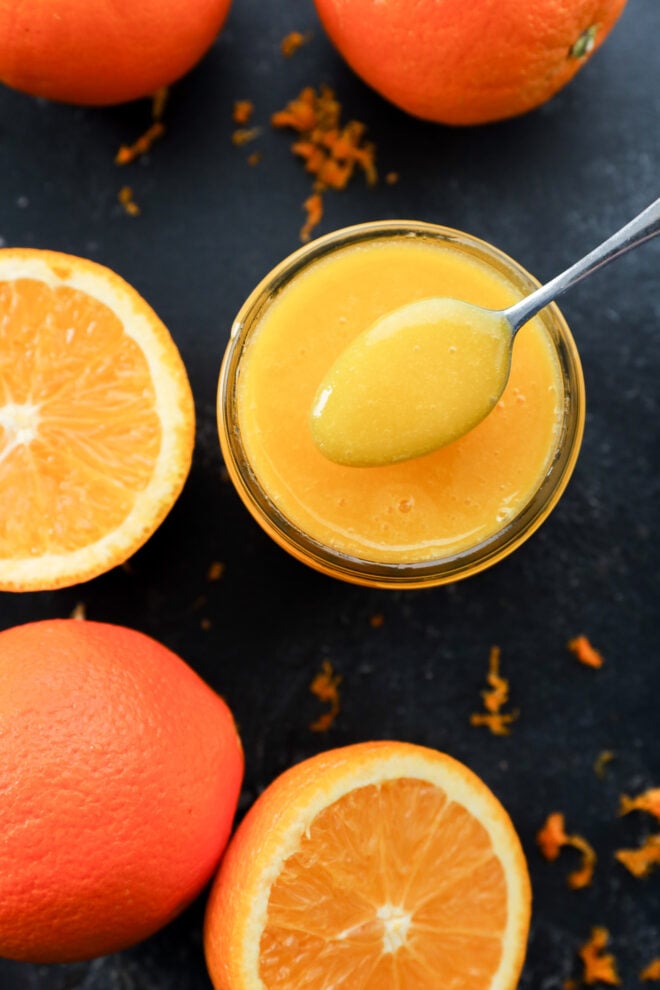
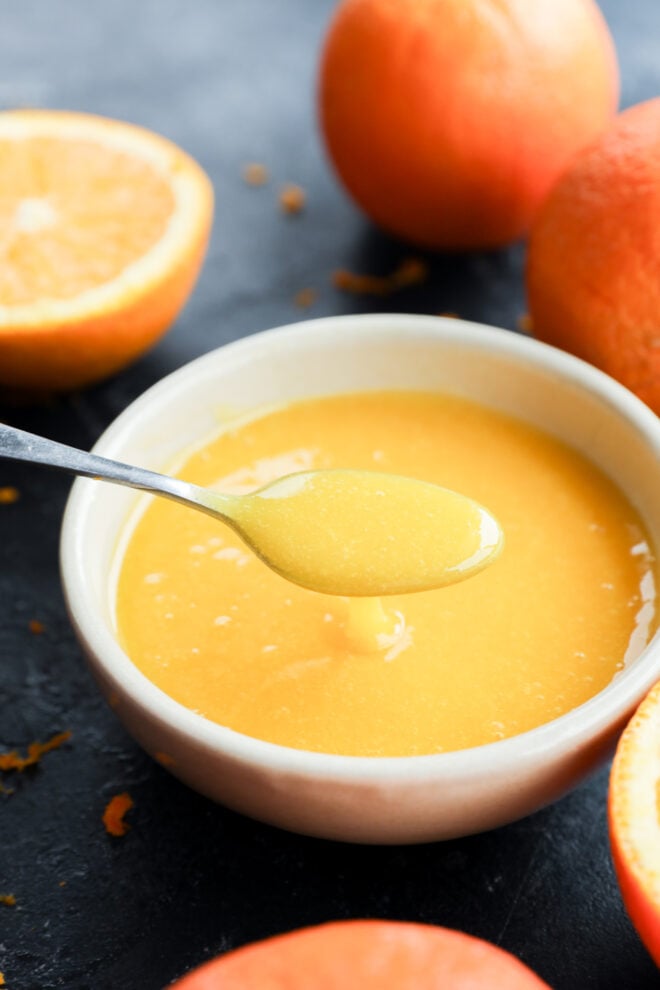
This orange curd recipe is buttery, bright, and smooth enough to spoon straight from the jar. It comes together quickly and works just as well in desserts as it does swirled into breakfast or spread on toast. It also happens to make a delicious edible gift!
about this Orange Curd Recipe
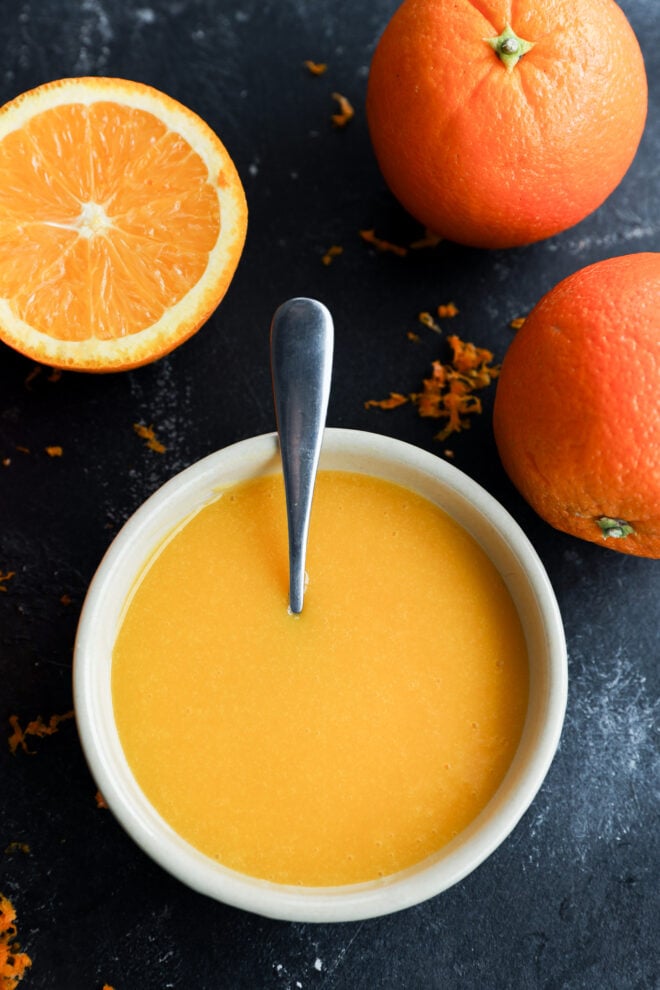
Orange curd is a smooth citrus spread made from fresh orange juice, zest, eggs, sugar, and butter, similar to lemon curd but softer and less sharp. It can be used as a spread for toast, swirled into yogurt or oatmeal, layered in trifles, or spooned into cupcakes. And yes, it’s also one of those treats that somehow disappear directly from the jar with a spoon!
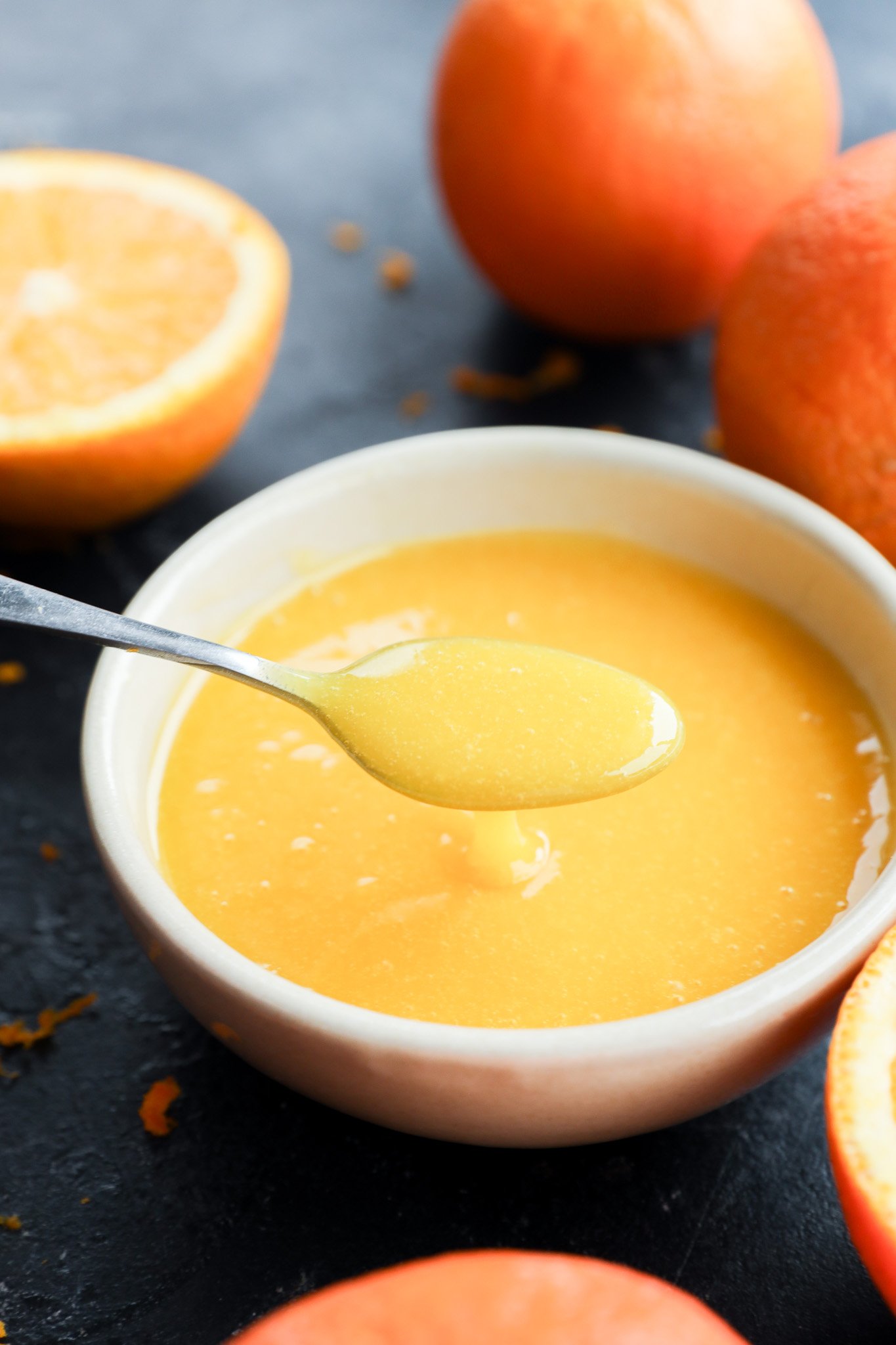
The biggest challenge with any curd recipe is to make sure it’s well-balanced. This one, after lots of trial and error, is just the right combination of tart and sweet. It’s richer and softer than lemon curd, with a gentle citrus profile that comes from fresh orange juice and orange zest. The butter rounds everything out for a custard-like texture that’s ultra-smooth.
This recipe is foolproof thanks to the double-boiler method, which gives you steady, gentle heat and prevents the eggs from curdling. It gives you full control over the heat, keeping the eggs from scrambling and ensuring a silky-smooth finish. Whip it up for holiday baking, weekend brunches, edible gifting, and just about any citrusy dessert you have on deck. It’s ideal whenever its citrus season!
Why You’ll Love This Recipe
- Only six basic ingredients you likely already have
- No special equipment required (you can make your own double boiler!)
- Cooked in 15 minutes
- Keeps well in the fridge for up to 10 days
- Bright citrus flavor without being overly tart
- Smooth, spreadable texture that works in endless ways
ingredients
Egg Yolks. Make sure they’re from large eggs and are at room temperature for even cooking.
Sugar. Use granulated sugar (white sugar) for this recipe. It also helps the curd thicken as it cooks with the egg yolks.
Orange Zest. This is where most of the orange flavor lives. The zest releases oils that deepen the citrus profile without adding more liquid.
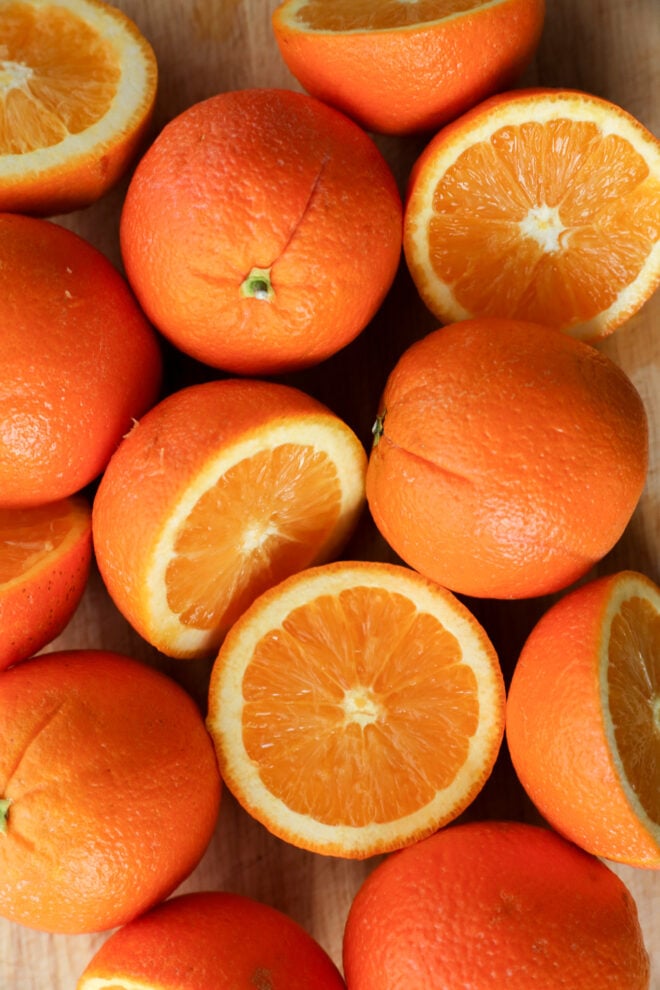
Orange Juice. Using fresh orange juice makes a big difference in flavor. It adds brightness and acidity to the curd, helping cut through the richness of the butter and yolks. You can use whatever orange you like – we like to use cara cara oranges, but regular navel oranges are wonderful too. Each type of orange will impart its own flavor.
Salt. Just a pinch brings out the other flavors and keeps the curd from tasting flat. Don’t skip it!
Butter. Use unsalted butter for this recipe (or if using salted butter, omit the salt called for in the recipe). Make sure it’s room temperature, so it melts evenly. Cold butter is harder to melt into the mixture.
this recipe’s must-haves
You’ll need either a double boiler or a DIY setup with a saucepan and a heatproof bowl that fits snugly on top. You want the bowl to fit on top without touching the water in the pan. This keeps the curd from overheating and scrambling the eggs.
A good whisk is non-negotiable. Constant whisking keeps the curd smooth and lump-free. You’ll also want a heatproof bowl to mix and melt everything safely. Plus a rubber spatula to scrape the curd out of the bowl.
A fine mesh strainer isn’t required, but it’s highly recommended for removing zest or any bits that might have formed. Plastic wrap helps to prevent a film from forming on the surface, and you’ll want an airtight container or jar to store your curd for up to 10 days.
how to make Orange Curd
Boil
Fill the bottom of a double boiler or the bottom of the saucepan with 1 to 2 inches of water. Bring to a boil at medium heat, then reduce to a simmer over medium-low heat.
Whisk
In the top of the double boiler (or in a heat safe bowl that fits snuggle on top of your pan), whisk together egg yolks, sugar, orange zest, orange juice, and salt. Continue to whisk constantly as the mixture cooks.
Cook
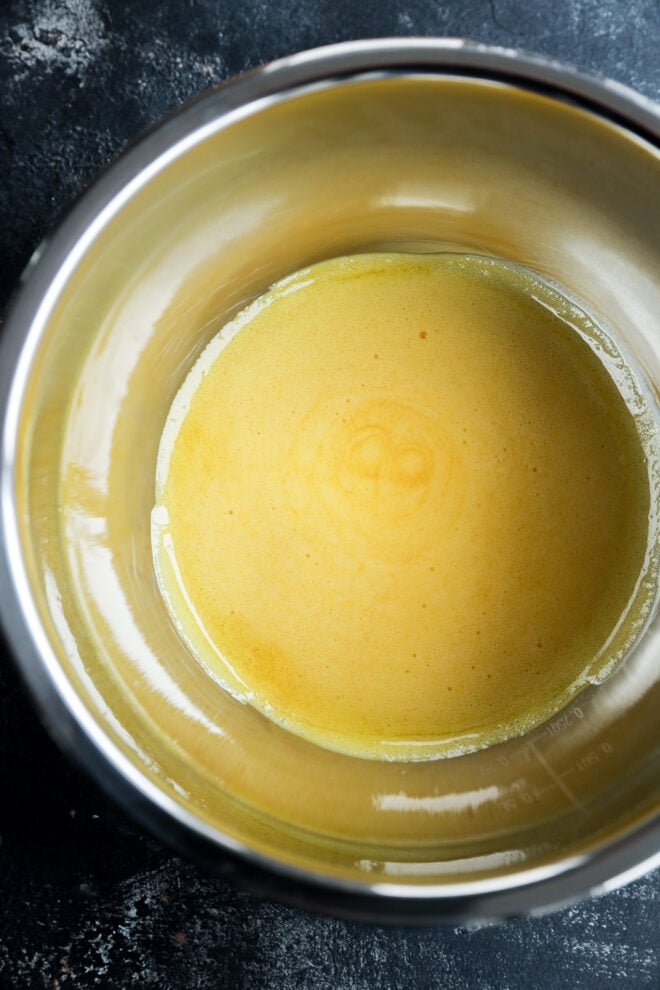
Whisk over simmering water until the consistency of the curd thickens and coats the back of a spoon. This will take about 10-15 minutes.
Add Butter
Remove from heat and whisk in the butter until fully melted and incorporated.
Strain & Cover
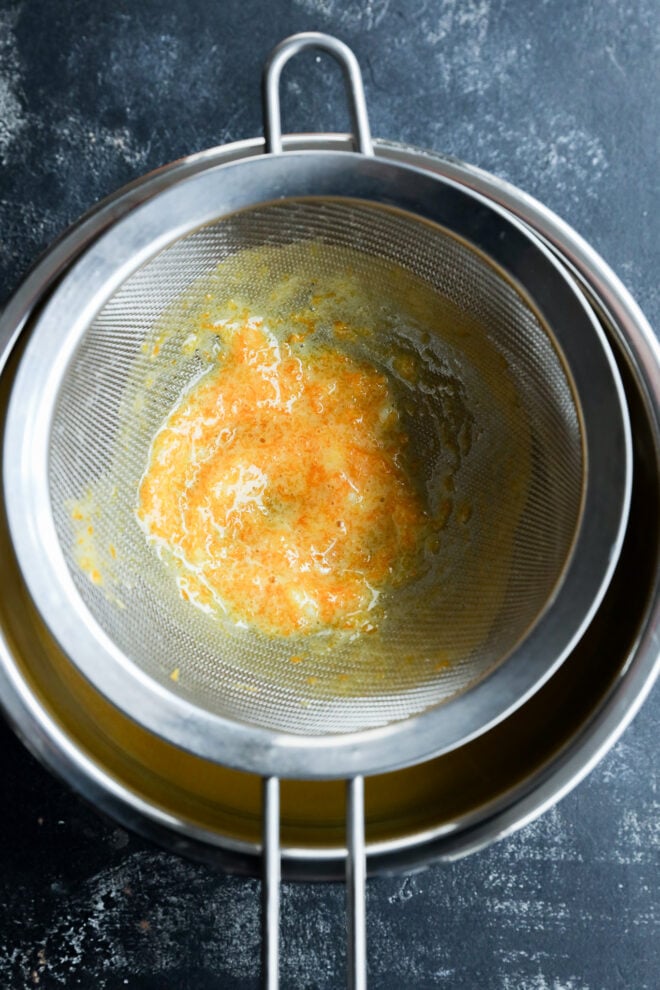
For the smoothest result, pour the curd through a fine mesh sieve into a clean bowl. Press plastic wrap directly on the surface of the curd to prevent a skin from forming. Let it cool completely.
Chill
Once cooled, remove the plastic wrap and transfer to an airtight container. Refrigerate for up to 10 days.
Tips for Success
- Keep the heat low and steady to avoid scrambling the eggs
- Don’t stop whisking! The constant movement keeps the curd silky
- Focus on texture, not time; look for it to coat the back of a spoon
- Strain the curd for the smoothest possible finish
- Press plastic wrap right onto the curd to prevent a skin from forming
- If you’re unsure, curd is done around 170–175°F on an instant-read thermometer
variations
You can swap half of the orange juice for lemon juice to make a lemon-orange version. This adds a sharper citrus punch and makes the curd a little brighter and more tart without losing that smooth, buttery base.
Blood oranges work beautifully when they’re in season. They give the curd a naturally vibrant pink hue and a deeper, slightly floral citrus flavor.
For a dairy-free version, use plant-based butter in place of regular butter. The texture will be slightly softer, but the curd will still set up well.
More Sauces to Try Out: Easy lemon curd I easy sauce for crab cakes I bang bang shrimp sauce I the best pizza sauce
faqs
Why is my curd lumpy?
The heat may have been too high, or it wasn’t whisked consistently. Strain it through a sieve to fix the texture.
Can I make this without butter?
You can, but it won’t have the same silky mouthfeel. A plant-based butter works better than skipping it entirely.
Is zest required?
For the best flavor, yes. It adds depth that juice alone can’t match.
If you need more breakfast inspirations then check out my breakfast recipe page.
what to serve with this Orange curd
Orange curd works well spread on scones, biscuits, toast, or English muffins. The buttery, citrus flavor is especially good alongside warm baked goods for breakfast or brunch.
It’s a natural fit with these orange dark chocolate chip scones, where the orange-on-orange combination really stands out. You can also use orange curd in place of lemon curd for a fresh twist on lemon meringue cookies or layered into this lavender lemon curd cake. The change in citrus fruits gives the desserts a softer, slightly sweeter flavor.
Stir it into yogurt for a quick breakfast or snack, or swirl it into warm oatmeal for a bright citrus kick. It also works great piped into cupcake centers or layered into trifles, pies, and parfaits (even spooned over ice cream!).
how to store
Keep in an airtight container in the refrigerator for up to 10 days.
More orange Desserts to Indulge In
Try these chocolate dipped candied orange slices that are a combination of bittersweet chocolate and candied citrus is simple but striking.
If you’re leaning more toward cozy bakes, these orange cranberry muffins are bright, tender, and just sweet enough. They pair especially well with a spoonful of orange curd on top.
This ginger cranberry orange loaf cake delivers bold flavor with every slice. The warm spice, tart cranberries, and citrus make it a standout – especially when served with a swipe of fruit curd.
Finally, if you make this orange curd recipe, please be sure to give this recipe a star recipe rating on the recipe card and/or leave a comment! I love to hear when you all make recipes, and I do take the time to respond to every single comment.
Feel free to drop questions below too, if you have them!
Oh and be sure to tag me on Instagram, Facebook, or Pinterest if you make the recipe! I love being able to see these recipes come to life in your homes – it’s my favorite thing to look through those photos. It really means the world to me!
Want to know when I come out with a new recipe or the latest news? Sign up for my newsletter to get them straight to your inbox!
orange curd
equipment
- Double boiler or DIY setup (saucepan + heatproof bowl)
- Whisk (constant whisking = smooth curd)
- Fine mesh sieve (optional, but recommended)
- Heatproof bowl
- plastic wrap
- Airtight container or jar for storage
ingredients
- 4 large egg yolks
- 1/3 cup granulated sugar
- 1 Tbsp orange zest about 1 medium orange
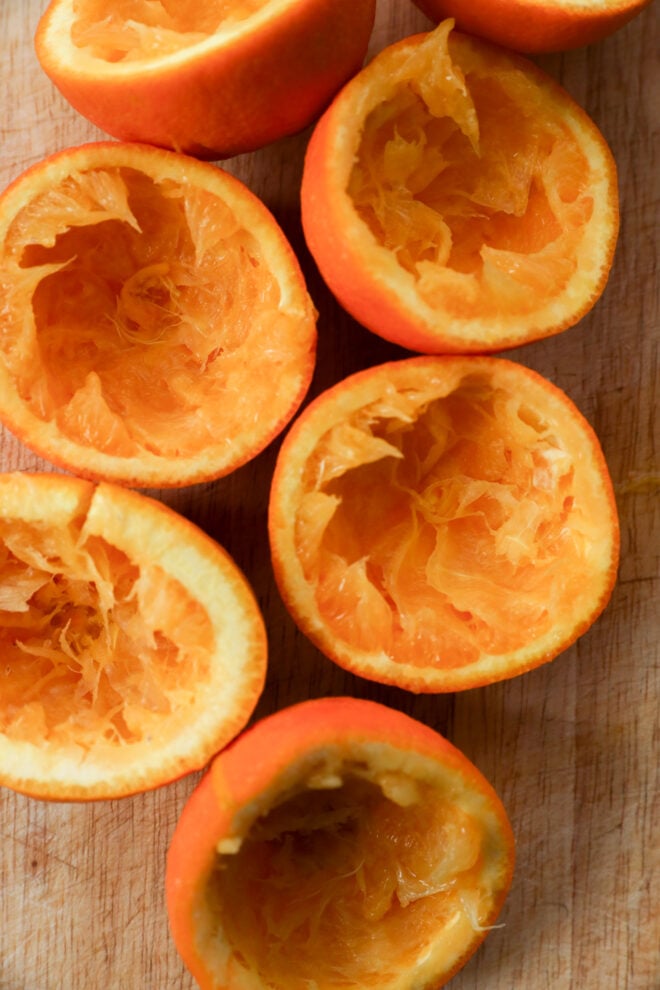
- 1/3 cup fresh orange juice about 2 medium oranges
- 1/8 tsp salt
- 6 Tbsp unsalted butter room temperature and cubed
instructions
- Fill the bottom of a double boiler with 1 to 2 inches of water. You can also make your own double boiler using a saucepan and a bowl that fits just inside the pan. Make sure that the bowl does not touch the water in the pot below. Place the pan on high heat and bring to a boil.
- Reduce to a simmer over medium-low heat.
- Place the top of the double boiler on top. Whisk together egg yolks, orange zest, orange juice, and salt. Continue to whisk as the curd cooks. By whisking constantly, you’ll prevent the egg yolks from curdling. Cook until the mixture thickens like a thicker cream sauce. It should easily coat the back of a wooden spoon at this point. It will take about 10 minutes.
- Remove from heat and whisk in the butter until melted.
- Optional step: pour the curd through a fine mesh sieve for the creamiest orange curd!
- Pour into a bowl and cover with plastic wrap, pressing the plastic wrap to adhere to the top of the curd. This will prevent a film from forming.
- Let cool completely. The curd will thicken as it cools. Remove plastic wrap and store in an airtight container or jar.
- Refrigerate for up to 10 days.
video
notes
- Use only low heat. If the water under the bowl is boiling, the eggs will scramble. Keep it at a gentle simmer.
- Whisk constantly as the curd cooks to keep the texture smooth and prevent curdling.
- Look for thickness: the curd is ready when it coats the back of a spoon and holds a clean line when you swipe your finger through it.
- Chill the curd to let it fully set. It may look loose while warm, but it thickens in the fridge.
- Store in an airtight container in the refrigerator for up to 10 days.
nutrition

about meghan
Meghan Yager is the recipe developer, food photographer, and creative force behind Cake ‘n Knife, where everyday moments are celebrated with bold, flavor-forward recipes. From cozy cocktails to bold appetizers and indulgent desserts, her approachable style brings people together around food worth sharing. Meghan’s work has been featured by Good Housekeeping, Oprah Daily, Today, Woman’s Day, and The Huffington Post. She lives in Denver, where she brings big flavor and a little sass to every bite.